Lucid Group's EV Sales Take a Hit
A 42% drop in Q1 sales has left Lucid Group reeling, but the company is quick to point out that the issue is not a demand problem.
Lucid Group finished 2025 on an upswing, building twice as many EVs as the previous year and reporting a 55% uptick in sales. However, the first quarter of 2026 arrived with a dip in sales. The company reported that it sold 3,093 vehicles in the first quarter, a 42% drop from the previous quarter and about 0.5% lower than the same period last year.
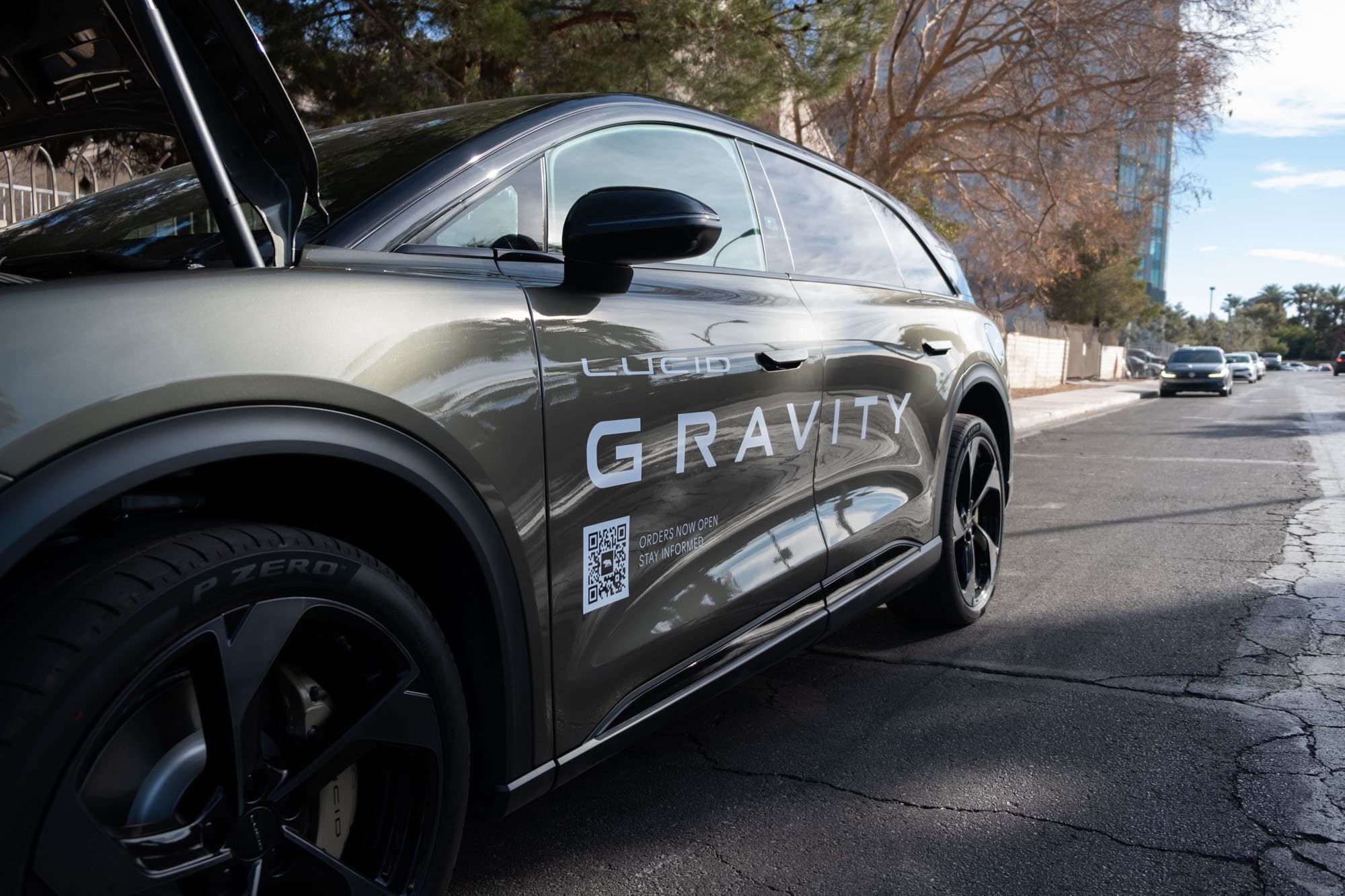
- The sales dip, and the gap between production and deliveries, is not a demand problem, according to Lucid Group. Instead, the company blames a supplier quality issue with its second-row seats, which disrupted deliveries of the Lucid Gravity for 29 days.
"Following eight record quarters, we showed strong results in both January and March which very nearly achieved year-over-year growth on their own," said Lucid spokesperson Nick Twork.
- The supplier issue also prompted Lucid Group to recall more than 4,000 Gravity SUVs. The company told the National Highway Traffic Safety Administration that it discovered some of the anchors for the SUV’s second-row seat belts were not properly welded.
Lucid Group seems confident that the disruption won't affect its production goals. The company has reaffirmed its previously announced production guidance of between 25,000 and 27,000 vehicles this year.
Lucid Group's Plans for the Future
-
The company is preparing to start building its first vehicle on a new lower-cost platform aimed at the mass market. The first vehicle will cost around $50,000, a price point that will put it in direct competition with the upcoming Rivian R2 SUV, as well as existing products like the Tesla Model Y, Tesla Model 3, and Chevrolet Equinox EV.
-
Lucid Group has said that it will use the new platform to produce a range of vehicles, including crossovers and SUVs.
Conclusion
Despite the setback in Q1 sales, Lucid Group remains optimistic about its future prospects. The company has a strong track record of growth and innovation, and its plans to enter the mass market with a lower-cost platform could be a game-changer for the industry.